As large parts of the UK wake up to snow-covered streets and sub-zero temperatures this week, many homeowners are questioning whether their solar panels can still perform in wintry conditions. With daylight hours at their shortest and roofs blanketed in snow, it’s a common concern: can solar panels really generate meaningful power during cold, snowy spells?
According to experts at Dwellow, a nationwide provider of renewable heating and home upgrade solutions, winter weather doesn’t spell the end for solar generation. In fact, with the right system design and a few simple seasonal considerations, photovoltaic (PV) systems can continue to produce clean, reliable energy throughout the colder months – even during snowy periods like those seen across the UK this week.
Ian McLaren, co-founder of Dwellow, says: “Whenever we experience a cold snap or snowfall, we see a spike in questions from homeowners who assume solar panels stop working in winter. The reality is quite the opposite. Solar panels are often more efficient in colder temperatures, and countries with far harsher winters than ours such as Germany and Canada are among the world’s leading adopters of solar energy. There’s absolutely no reason UK households can’t benefit from solar power all year round, even during weeks like this.”
Here’s Dwellow’s three solar ‘truths’ this January – and five top tips;
1. Snow can help harvest solar energy
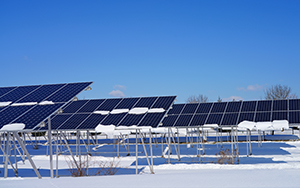
Far from being an obstacle to capturing solar energy, snow can actually enhance system performance in many cases through the albedo effect, as sunlight reflected from snow-covered ground is redirected back onto solar panels.
The albedo effect describes how much incoming sunlight a surface reflects rather than absorbs. It is measured on a scale from 0 to 1, where darker surfaces like asphalt have low albedo and absorb most sunlight, while bright surfaces such as snow have a high albedo and reflect a large portion of it. Fresh snow can reflect up to 80-90% of incoming sunlight.
McLaren explains: “When solar panels are installed above or near snow-covered ground, this reflected light can strike the panels from below or at indirect angles, increasing the total amount of solar radiation they receive. As a result, panels can generate more electricity than expected in snowy conditions, especially when the panels themselves remain clear and are tilted to capture both direct and reflected light.”
Of course, when solar panels are covered by a thick layer of snow, sunlight simply can’t reach them. However, most arrays are installed at an angle, so snow naturally slides off or melts fairly quickly. However, after heavy snowfall, it’s worth checking if your panels are clear. If you can safely reach them, gently brush away snow using a soft broom or snow rake.
2. Solar panels need daylight – not heat or blazing sunshine
One of the biggest myths is that solar panels rely on hot, sunny weather to produce electricity. In reality, solar panels work by capturing daylight, not heat. The photovoltaic (PV) cells in the panels convert sunlight into power, so even on cloudy days, your system will still generate energy, especially if homeowners have installed high-performance monocrystalline panels, which perform better in cloudy, low-light conditions.
McLaren explains: “Shorter days in winter do mean fewer daylight hours and lower generation, but even a modest solar generation will reduce your reliance on the grid at the most expensive time of year for electricity. Pairing your solar panels with a battery storage system can help you store excess energy when it’s brightest, ready to use come the evening.”
Dwellow says solar batteries are ideal for people on time-of-use tariffs because they can be charged overnight when electricity is cheaper and then used during peak, more expensive periods.
3. Cold weather can actually boost performance
It may sound surprising, but solar panels can perform better in lower temperatures. Like most electronics, panels work less efficiently when they get too hot (performance typically drops above 25C). Cold weather, on the other hand, helps reduce resistance in electrical circuits, improving efficiency.
McLaren adds: “While panels need daylight rather than heat to generate electricity, lower temperatures help improve electrical efficiency by reducing resistance within the system. That’s why, as long as there’s daylight, solar panels can perform extremely reliably throughout the winter months.”
Dwellow’s five top tips for winter solar efficiency
- Keep panels clean and clear of leaves and debris and cut back nearby trees that cast shade
- Choose high-performance monocrystalline panels which work well in cloudy low-light conditions and allow you to get more power from the same roof space
- Monitor your output via solar apps to check on your panel performance and spot any issues early
- Consider battery storage to store excess energy for use during evenings or gloomy days, or charge your battery overnight at cheaper rates if you’re on a time-of-use tariff.
- Select an installer, such as Dwellow, that will design your system to get optimal efficiency with a combination of panels and batteries
McLaren adds: “People are often surprised at how well solar panels perform in winter, even when there’s snow on the ground. As long as they’re looked after and working efficiently, they’ll keep producing plenty of clean energy all year.”
Interested in solar? Use Dwellow’s free solar quote tool for a bespoke price straight to your inbox in just 60 seconds. https://www.dwellow.co.uk/solar/quote